


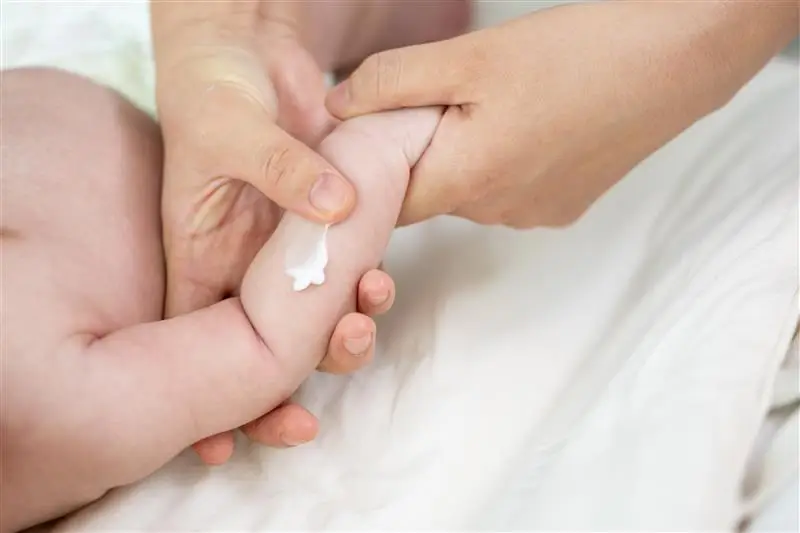
It usually begins with something small, a dry patch on your baby’s cheek, some redness behind the knees, or a rash you’re not quite sure about. You change detergents, adjust diapers, or switch to another lotion, hoping it will help. Then you check the ingredient list on the bottle and notice terms that are unfamiliar. As parents, it is easy to assume that anything made for babies is automatically safe, but that is not always the case.
Most baby lotions and other baby products contain fragrances or additives that the delicate skin may not tolerate well. Because babies absorb more through their skin than adults do, even slight irritants may cause discomfort. Understanding the ingredients in these products will help you make simple choices that support your baby’s comfort and well-being from the very beginning.
Why Baby Skin Is Different
Infant skin is both structurally and functionally different from adult skin. During the first months of life, the skin barrier is still developing, and a baby’s skin is thinner and more sensitive than an adult’s skin. These differences affect how a baby’s skin will react to the environment, topical products, and any given irritants.
The stratum corneum, the very outermost protective layer of the skin, is not fully mature in infants. With its reduced thickness, the barrier is less effective in retaining moisture and protecting against outside elements. This situation also increases transepidermal water loss, contributing to dryness and increasing the need for effective moisturisers.
Another key difference is in permeability. Due to the immature barrier and higher surface-area-to-body-weight ratio, infant skin absorbs topical materials more easily than adult skin. Ingredients applied to a baby’s skin can thus penetrate more easily and in larger amounts.
Since the skin’s protective and immune functions are still developing, babies are much more susceptible to irritation, inflammation, and reactions to artificial fragrances, preservatives, and various other cosmetic ingredients. It is for this reason that infant skin benefits from specially formulated products and gentler care.
Red Flags: Ingredients to Avoid in Baby Lotions
Many products used for babies’ daily needs contain ingredients that hinder normal development or irritate sensitive skin. Being aware of these substances helps parents choose safer and more appropriate baby products for infants.
1. Parabens
Parabens are usually found as methylparaben or butylparaben in a variety of creams, shampoos, and other water-based products as preservatives. They inhibit the growth of microbes but interfere with hormone functioning and can irritate thin, highly absorbent infant skin.
2. Mineral Oil
Mineral oil in some infants creates a coating on the skin that interferes with normal barrier function. Although the purified grades are considered safe, some babies still build up clogged pores or irritation. Natural, plant-derived oils are considered safer and better tolerated.
3. Sulfates
Ingredients like SLS and SLES provide the foaming action to cleaners and washes. While these ingredients help products lather, they actually strip protective oils away from skin, causing dryness and irritation. Babies simply do not require strong foaming agents in order to be clean.
4. Phthalates
Phthalates are often added to lotions, powders, and wipes to extend the length of time a fragrance lingers on the skin. These compounds have been associated with hormone disruption, and since they are often masked under the term “fragrance,” they are exceptionally hard to spot on labels.
5. Artificial Fragrances
Fragrance blends can be made from dozens of undisclosed chemicals. These mixtures can cause irritation or allergic reactions, and sometimes contain phthalates. Opting for products that are free of artificial fragrance lowers the risk of sensitising a baby’s skin.
6. Formaldehyde-Releasing Preservatives
Some preservatives, like DMDM Hydantoin and Quaternium-15, are formaldehyde-releasing agents that work to inhibit microbial growth. Formaldehyde is known to be a skin irritant, and prolonged exposure presents additional health risks. Therefore, products labelled as free from these preservatives will be safer to use.
Instead, look for sodium benzoate and potassium sorbate, which are considered low-risk at regulated levels of use.
7. Dyes and Colourants
Synthetic dyes are generally incorporated to give the products an attractive appearance. On sensitive skin, these colourants may cause irritation. They serve no practical purpose in themselves. Avoiding products containing artificial colours will reduce unnecessary exposure to a possible irritant.
8. Bisphenol A (BPA)
BPA is found in plastics used for bottles, cups, and containers. It may leach into liquids and affect hormonal development. BPA-free items are widely available, but it is still helpful to check packaging information.
Figaro Baby lotion and oils avoid BPA and other unwanted additives. Our natural formulas include olive oil enriched with vitamin E and are free of parabens, dyes, and mineral oil. Our packaging is made to minimise plastic-related contaminants, offering a much cleaner and safer choice for infant care.
The Green List: Safe Baby Lotion Ingredients
Choosing gentle ingredients is essential for supporting a baby’s developing skin barrier. These ingredients are commonly recognised as safe and effective in infant skincare:
1. Natural Plant Oils
Oils such as olive oil and sunflower seed oil supply essential fatty acids that help maintain moisture and support the skin’s lipid barrier. Olive oil acts to soften skin and reduce dryness by naturally functioning as an emollient and antioxidant. Sunflower seed oil is lightweight, non-comedogenic, and thus very suitable for sensitive infant skin.
2. Vegetable Glycerin
A humectant attracts water into the outer layers of the skin to help keep skin hydrated, improving softness without leaving a heavy residue.
3. Shea Butter
Rich in triglycerides and natural vitamins, shea butter provides lasting moisturisation and helps barrier recovery. Its composition makes it gentle enough for the dry or reactive skin of babies.
4. Tocopherol (Vitamin E)
It acts as an antioxidant protecting the skin’s surface, while supporting the stability of natural oils in a formulation. Vitamin E also helps with softness and smoothness.
5. Squalene
A naturally occurring component of the skin’s lipid layer. In baby lotions, squalene offers lightweight moisturisation and helps strengthen the barrier without clogging pores.
What Parents Should Check on Baby Lotion Labels
Product labels are not always clear, and terms like “gentle” or “safe” do not always mean that the formula is mild. Learning to look beyond the marketing claims helps you choose products that protect your baby’s skin. Here’s how you can do that:
- Ingredients are listed in order of concentration. That means that the first few ingredients in the formula comprise the vast majority of it. Look for nourishing components like natural oils, glycerin, or shea butter near the top.
- Watch out if “fragrance” is high in the list. This may contain several undeclared chemicals.
- Learn the common alternate names of some additives. For instance, parabens may be written as methylparaben or butylparaben. Mineral oil may be listed as paraffinum liquidum.
- Choose products with clear, straightforward ingredient lists rather than long chemical-heavy formulas.
- Avoid lotions with unnecessary dyes or strong scents, as these can irritate delicate skin.
- Opt for lotions that use mild, approved preservatives like sodium benzoate and potassium sorbate.
Finally, always do a patch test on a small area of your baby’s skin before using any new product to ensure that it does not trigger irritation or redness.
Key Takeaway
A baby’s skin is still developing, which means it reacts differently to products than an adult’s would. Once you understand how sensitive it is and how easily it absorbs what you put on it, the right lotion becomes a lot clearer. That means looking out for irritants, reading ingredient lists carefully, and favouring gentle, familiar ingredients will help you avoid products that could cause discomfort.
Pay a little more attention to labels and do a patch test before use, and you’ll be able to create a routine that keeps your baby’s skin calm, protected, and well-nourished. Simple choices go a long way in supporting healthy skin right from the start.
Frequently Asked Questions (FAQs)
1. Is baby lotion necessary?
Yes, baby skin loses moisture quickly because its barrier is still developing. A gentle baby lotion helps maintain hydration, prevent dryness, and support a healthy skin barrier.
2. What ingredients should not be included in lotions?
Avoid parabens, sulfates, phthalates, artificial fragrances, dyes, mineral oil, and formaldehyde-releasing preservatives. These can irritate delicate skin or disrupt natural skin functions.
3. Why are natural and organic baby products safer?
They use milder, plant-based ingredients and avoid harsh chemicals, thus reducing the possibility of irritation. Their simpler formulas are better suited to a baby’s developing skin barrier.
4. How do I know if a product for a baby is really nontoxic and gentle?
Look for short, clear ingredient lists without artificial fragrance or parabens and sulfates. It should be transparently labelled, contain mild preservatives, and be dermatologically tested.