


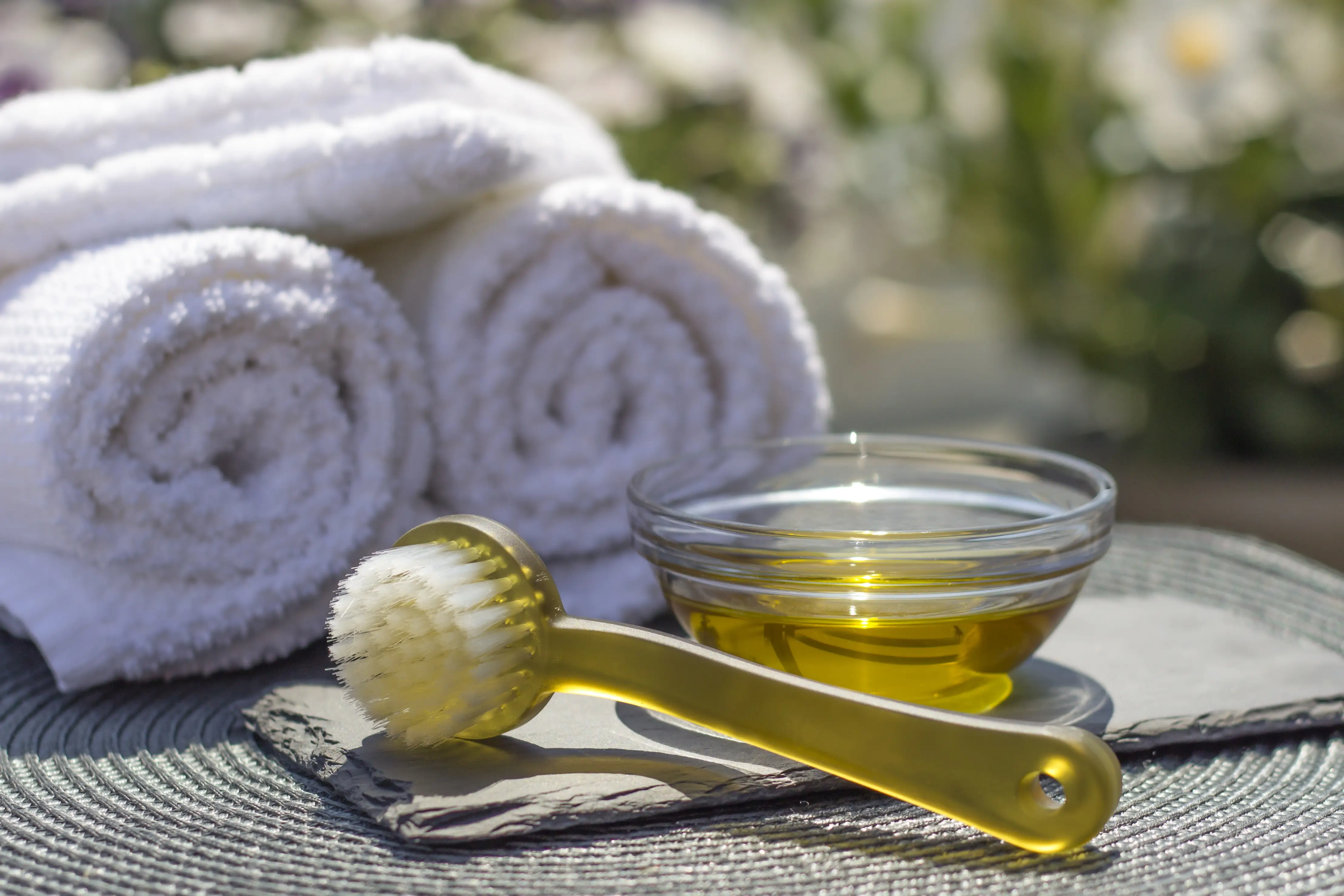
Olive oil is one of the most versatile ingredients in any home, and in many parts of the world it has long been used for skin and body massage. If you’re looking for a simple oil for glowing skin, olive oil is a popular choice in everyday personal care routines: it is a rich source of Vitamin E and can leave the skin feeling soft.
In this guide, you’ll learn how to choose the right olive oil for your skin, how to check that it suits you and how to use it on your body and face for a soft, healthy-looking glow.
How to Choose the Best Olive Oil for Your Skin
Not every skin reacts in the same way, so it’s worth taking a moment to get to know the oil you’re using. These tips will help you choose well and make sure it works for you before you make it part of your routine.
Extra Virgin or Pure Olive Oil: Which One to Choose?
If you’re searching for the best olive oil for skin glow, it helps to know the main types. Extra virgin olive oil is the highest grade of olive oil, while pure olive oil is a blend of extra virgin and refined olive oils. Whichever you choose, check the product information and follow the manufacturer’s instructions for its intended uses. Figaro Multipurpose Pure Olive Oil is one of the products available within the Figaro olive oil range. The personal-care uses described in this article refer to the traditional and generic uses of olive oil and should not be interpreted as specific benefits or recommended uses of Figaro products.
What to Check on the Label
Before applying any olive oil to your skin, take a moment to read the label. Check the product information, follow the manufacturer’s instructions for its intended use and make sure it’s within its best before date. Store the bottle away from heat and direct light to keep the oil in good condition for longer.
How to Do a Patch Test Before You Start
Even natural ingredients can cause a reaction on some skins. Before using olive oil for the first time, apply a small amount to the inside of your forearm or behind your ear and leave it for 24 to 48 hours. If you notice redness, itching or irritation, don’t use it on your face or body.
How to Tell If It’s Working for Your Skin
After a few uses, your skin should feel soft and comfortable. If you notice breakouts, redness, itching or a greasy film that doesn’t absorb, stop using it. If the reaction doesn’t go away, consult a dermatologist.
Body Oil for Glowing Skin: Using Olive Oil on Your Body
Your body is often the easiest place to start. In many parts of the world, olive oil has long been used for skin and body massage, so it fits naturally into a body care routine.
Why Use Olive Oil on Your Skin
As a body oil for glowing skin, olive oil can help lock in moisture and leave the skin feeling soft. It is a rich source of Vitamin E and may be particularly suitable for dry areas such as elbows, knees and heels.
How to Apply Olive Oil on Your Body
- Apply it straight after a shower or bath, while your skin is still slightly damp. This can help retain moisture and leave the skin feeling soft.
- Pour a small amount, about a teaspoon for each area, into your palms and warm it between your hands.
- Massage it in with gentle circular movements, spending a little extra time on the driest areas.
- Wait a few minutes before getting dressed so the oil can absorb fully.
- If you prefer a lighter finish, mix a few drops into your usual body lotion instead.
Face Oil for Glowing Skin: Using Olive Oil on Your Face
Facial skin is more delicate and varies more from person to person, so using olive oil on your face calls for a little more care. Here’s what to know before you try it.
Is Olive Oil Right for Your Skin Type?
Every skin is different, so start slowly when trying olive oil as a face oil for glowing skin. If you have combination skin, you may prefer to apply it only to certain areas, such as your cheeks. If your skin is oily or prone to breakouts, olive oil may feel too rich on your face, so it’s better to keep it for your body.
How to Apply Olive Oil on Your Face
- Start with clean skin, after washing your face with your usual cleanser.
- Warm two or three drops of olive oil between your fingertips.
- Gently press the oil onto your cheeks, forehead and chin rather than rubbing it in.
- Use it in the evening, so it has time to absorb overnight.
- For a lighter option, mix a single drop into your usual moisturiser.
A small amount of olive oil can also be used to help dissolve certain types of makeup: massage a few drops onto dry skin, wipe away with a soft, warm cloth and then cleanse as usual. Avoid getting it into your eyes.
Your Everyday Glow, Made Simple
Olive oil is a simple, versatile oil for glowing skin with a long history in traditional beauty routines. Choose your oil, do a patch test first and adapt how you use it to your skin: on your body, apply it after a shower to leave the skin feeling soft; on your face, a few drops at night are enough. With a little consistency, it can easily become one of the most enjoyable steps in your daily routine.
Discover the Figaro olive oil range.
If you want to know more about it: 11 Irresistible Benefits of Olive Oil For Skin
Frequently Asked Questions
Which oil is best for glowing skin?
There’s no single best oil for glowing skin, as every skin is different. Olive oil, almond oil and coconut oil are all popular choices. Olive oil is a rich source of Vitamin E and is used for skin and body massage in many parts of the world. So, which oil is best for glowing skin? The one that suits your skin, feels comfortable and passes your patch test.
Can I leave olive oil on my face overnight?
Yes, if it suits your skin and has passed your patch test. Apply just two or three drops after cleansing so your skin doesn’t feel greasy by morning, and change your pillowcase regularly. If your skin is oily or prone to breakouts, avoid leaving it on your face overnight.
Can I use olive oil on my skin in hot and humid weather?
Yes, but less is more. In hot and humid weather, use a smaller amount, apply it in the evening rather than during the day and focus on your body rather than your face. If your skin feels sticky, gently blot away any excess with a soft tissue.
Can olive oil replace my moisturiser or sunscreen?
No. Olive oil is not a sunscreen and doesn’t replace one, so always apply a sunscreen during the day. You can use olive oil alongside your usual moisturiser as part of your evening routine.